Valid Sudoku
Problem
https://leetcode.com/problems/valid-sudoku/
Determine if a 9 x 9 Sudoku board is valid. Only the filled cells
need to be validated according to the following rules:
Each row must contain the digits
1-9without repetition.Each column must contain the digits
1-9without repetition.Each of the nine
3 x 3sub-boxes of the grid must contain the digits1-9without repetition.
Note:
A Sudoku board (partially filled) could be valid but is not necessarily solvable.
Only the filled cells need to be validated according to the mentioned rules.
Example 1:
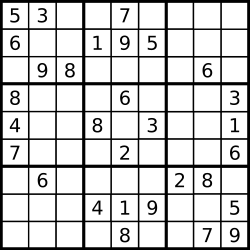
Input: board =
[["5","3",".",".","7",".",".",".","."]
,["6",".",".","1","9","5",".",".","."]
,[".","9","8",".",".",".",".","6","."]
,["8",".",".",".","6",".",".",".","3"]
,["4",".",".","8",".","3",".",".","1"]
,["7",".",".",".","2",".",".",".","6"]
,[".","6",".",".",".",".","2","8","."]
,[".",".",".","4","1","9",".",".","5"]
,[".",".",".",".","8",".",".","7","9"]]
Output: true
Example 2:
Input: board =
[["8","3",".",".","7",".",".",".","."]
,["6",".",".","1","9","5",".",".","."]
,[".","9","8",".",".",".",".","6","."]
,["8",".",".",".","6",".",".",".","3"]
,["4",".",".","8",".","3",".",".","1"]
,["7",".",".",".","2",".",".",".","6"]
,[".","6",".",".",".",".","2","8","."]
,[".",".",".","4","1","9",".",".","5"]
,[".",".",".",".","8",".",".","7","9"]]
Output: false
Explanation: Same as Example 1, except with the 5 in the top left corner being modified to 8. Since there are two 8's in the top left 3x3 sub-box, it is invalid.
Constraints:
board.length == 9board[i].length == 9board[i][j]is a digit1-9or'.'.
Pattern
Array, Hash Table, Matrix
Approaches
Explanation
To validate board , we must check that each row, column, and 3x3 square
contains no duplicates and contains the digits 1-9. We can do this by
iterating through all the rows, columns, and squares and storing the
numbers we see in a set. If we see a number that is already in the set,
we return False. If we finish checking all rows, columns, and squares
without finding duplicates, we return True.
Code
def isValidSudoku(board: list[list[str]]) -> bool:
    """Check that ``board`` is a valid sudoku board."""
    for i in range(9):
        row = board[i]
        if not is_valid(row):
            return False

    for j in range(9):
        col = [board[i][j] for i in range(9)]
        if not is_valid(col):
            return False

    for x in range(0, 9, 3):
        for y in range(0, 9, 3):
            square = [board[x + i][y + j] for i in range(3) for j in range(3)]
            if not is_valid(square):
                return False

    return True


def is_valid(cells: list[str]) -> bool:
    """Check that ``cells`` has no duplicates."""
    seen = set()

    for num in cells:
        if num != "." and num in seen:
            return False
        else:
            seen.add(num)

    return True
Test
>>> from valid_sudoku__hash_sets import isValidSudoku
>>> board = [
...     ['5', '3', '.', '.', '7', '.', '.', '.', '.'],
...     ['6', '.', '.', '1', '9', '5', '.', '.', '.'],
...     ['.', '9', '8', '.', '.', '.', '.', '6', '.'],
...     ['8', '.', '.', '.', '6', '.', '.', '.', '3'],
...     ['4', '.', '.', '8', '.', '3', '.', '.', '1'],
...     ['7', '.', '.', '.', '2', '.', '.', '.', '6'],
...     ['.', '6', '.', '.', '.', '.', '2', '8', '.'],
...     ['.', '.', '.', '4', '1', '9', '.', '.', '5'],
...     ['.', '.', '.', '.', '8', '.', '.', '7', '9'],
... ]
>>> isValidSudoku(board)
True
>>> board = [
...     ['8', '3', '.', '.', '7', '.', '.', '.', '.'],
...     ['6', '.', '.', '1', '9', '5', '.', '.', '.'],
...     ['.', '9', '8', '.', '.', '.', '.', '6', '.'],
...     ['8', '.', '.', '.', '6', '.', '.', '.', '3'],
...     ['4', '.', '.', '8', '.', '3', '.', '.', '1'],
...     ['7', '.', '.', '.', '2', '.', '.', '.', '6'],
...     ['.', '6', '.', '.', '.', '.', '2', '8', '.'],
...     ['.', '.', '.', '4', '1', '9', '.', '.', '5'],
...     ['.', '.', '.', '.', '8', '.', '.', '7', '9'],
... ]
>>> isValidSudoku(board)
False
Complexity
\(n\) is the size of a block (3 for a 9x9 board)
Measure |
Complexity |
Notes |
|---|---|---|
Time |
\(O(n^4)\) |
number of rows, columns, and squares to check is \(3n^2\) and there are \(n^2\) cells in each row, column, and square |
Auxiliary Space |
\(O(n^2)\) |
numbers in each row, column, and square are stored in a set for checking duplicates and valid digits |
- valid_sudoku__hash_sets.isValidSudoku(board: list[list[str]]) bool
Check that
boardis a valid sudoku board.
- valid_sudoku__hash_sets.is_valid(cells: list[str]) bool
Check that
cellshas no duplicates.
Explanation
We can reduce the number of passes through the board by checking the row,
column and 3x3 square for duplicates for each cell at the same time. We
maintain a set of seen numbers for each row, column, and square. If we see
a number in one of these sets, we return False. Otherwise, we add the
number to the appropriate set. If we finish checking all cells without
finding duplicates, we return True.
Code
from collections import defaultdict


def isValidSudoku(board: list[list[str]]) -> bool:
    """Check that ``board`` is a valid sudoku board in a single pass."""
    rows = defaultdict(set)
    columns = defaultdict(set)
    squares = defaultdict(set)

    for i in range(len(board)):
        for j in range(len(board[0])):
            cell = board[i][j]

            if cell == ".":
                continue

            if (
                cell in rows[i]
                or cell in columns[j]
                or cell in squares[(i // 3, j // 3)]
            ):
                return False

            rows[i].add(cell)
            columns[j].add(cell)
            squares[(i // 3, j // 3)].add(cell)

    return True
Test
>>> from valid_sudoku__one_pass import isValidSudoku
>>> board = [
...     ['5', '3', '.', '.', '7', '.', '.', '.', '.'],
...     ['6', '.', '.', '1', '9', '5', '.', '.', '.'],
...     ['.', '9', '8', '.', '.', '.', '.', '6', '.'],
...     ['8', '.', '.', '.', '6', '.', '.', '.', '3'],
...     ['4', '.', '.', '8', '.', '3', '.', '.', '1'],
...     ['7', '.', '.', '.', '2', '.', '.', '.', '6'],
...     ['.', '6', '.', '.', '.', '.', '2', '8', '.'],
...     ['.', '.', '.', '4', '1', '9', '.', '.', '5'],
...     ['.', '.', '.', '.', '8', '.', '.', '7', '9'],
... ]
>>> isValidSudoku(board)
True
>>> board = [
...     ['8', '3', '.', '.', '7', '.', '.', '.', '.'],
...     ['6', '.', '.', '1', '9', '5', '.', '.', '.'],
...     ['.', '9', '8', '.', '.', '.', '.', '6', '.'],
...     ['8', '.', '.', '.', '6', '.', '.', '.', '3'],
...     ['4', '.', '.', '8', '.', '3', '.', '.', '1'],
...     ['7', '.', '.', '.', '2', '.', '.', '.', '6'],
...     ['.', '6', '.', '.', '.', '.', '2', '8', '.'],
...     ['.', '.', '.', '4', '1', '9', '.', '.', '5'],
...     ['.', '.', '.', '.', '8', '.', '.', '7', '9'],
... ]
>>> isValidSudoku(board)
False
Complexity
\(n\) is the size of a block (3 for a 9x9 board)
Measure |
Complexity |
Notes |
|---|---|---|
Time |
\(O(n^4)\) |
number of rows, columns, and squares to check is \(3n^2\) and there are \(n^2\) cells in each row, column, and square |
Auxiliary Space |
\(O(n^2)\) |
numbers in each row, column, and square are stored in a set for checking duplicates and valid digits |
- valid_sudoku__one_pass.isValidSudoku(board: list[list[str]]) bool
Check that
boardis a valid sudoku board in a single pass.